
|
|
The mission of Chapters within the American Fisheries Society is to advance Society goals by coordinating member activities related to information exchange, outreach, and aquatic stewardship within their geographic region, including coordinating with appropriate local, provincial, and state-level government and non-government agencies and organizations.
More ›
Do you want to become a member or renew? Visit our membership page
Do you want to connect with other members? Visit our our new Message & Forum Boards!
or you can use the WIAFS distribution list
Snail Mail:
Wisconsin Chapter AFS
PO Box 1846
Madison, WI 53701
|
|
Road/Stream
Crossings - Inventory, Assessment, Design and Construction Workshop
April 22-24, 2008 Holiday Inn Express, Rhinelander, Wisconsin
Learn Practical Design Techniques
This applied workshop will improve your ability to assess,
design and install culverts at road/stream crossings. Culverts at road/stream
crossings have had negative effects on local stream
ecology and hydraulics and often
fail due to design and installation
problems. This workshop will present
useful information, step-by-step
guidelines and proven techniques to help
you solve your road/stream crossing problems.
Gain "Hands-On" Knowledge
This hands-on workshop will involve field activities and case studies
illustrating both problems and solutions. We recommend comfortable,
weather-protective clothing for the field activities. Rubber boots or waders are
recommended.
Special Afternoon Session
On Thursday afternoon, we have set aside time to work on
your sites. Please bring photos, survey data, maps and
other information about your sites and we will help answer
your questions.
|
|
|
|
Wisconsin Chapter
American Fisheries Society
Helping Science to persevere in a
political and social world
37th Annual Meeting
of the Wisconsin AFS
|
NEW CHAPTER T-SHIRTS NOW AVAILABLE
As part of our ongoing chapter fundraising activities the Chapter Raffle and Revenue Chair is happy to announce that a brand new chapter t-shirt design is now available. The design is part of a new series for the fictional International Brotherhood of Electrofishing Boat Operators union. The front of the t-shirt displays the union logo and the back of the t-short depicts a comical electrofishing scene. T-shirts and sweatshirts will be available at the Annual Meeting in Milwaukee, and are available for members and non-members to purchase.
In additon, to help get the word out and generate sales, feel free to download the sales poster to post in your office. Please note that checks should be made out to: American Fisheries Society - Wisconsin Chapter. Revenue from t-short sales will go towards supporting Wisconsin Chapter AFS scholarship funds for students enrolled in an aquatic science programs in Wisconsin.
|
|
LOSING SPECIES
Its findings are startling. A global study lead by Dalhousie's Boris Worm shows current trends projecting the collapse of all currently fished seafoods before 2050. The international group of ecologists and economists show that the loss of biodiversity is profoundly reducing the ocean's ability to produce seafood, resist diseases, filter pollutants, and rebound from stresses such as over-fishing and climate change.
The study, published in the November 3rd issue of the journal Science, reveals that every species lost causes a faster unraveling of the overall ecosystem. Conversely every species recovered adds significantly to overall productivity and stability of the ecosystem and its ability to withstand stresses.
The four-year analysis is the first to examine all existing data on ocean species and ecosystems, synthesizing historical, experimental, fisheries, and observational datasets to understand the importance of biodiversity at the global scale.
More ›
|
|
SALMON HEALTH
How do you tell if a fish is fit and well? This is a question which has troubled farmers and biologists for years, but now scientists may have come up with the answer - using DNA chips. By studying the genes of Atlantic salmon scientists from three UK universities are developing a DNA chip to monitor the health and performance of salmon, a tool which could both save the salmon industry thousands and also help conserve dwindling wild salmon populations.
Farmers and conservationists currently have to rely on the general appearance of salmon as an indicator of their health, which is far from ideal. The new DNA chip will help farmers assess the state of their stock more accurately and also enable conservationists to sample wild populations to ascertain their health and wellbeing.
To develop a more effective method of monitoring salmon health and performance the scientists have been studying salmon gene expression. By doing this, they have identified genes which play different roles in the lifecycle of salmon, for example immune response.
More ›
|
|
INTERSTATE MOVEMENT OF FISH PROHIBITED
Due to outbreaks of viral
hemorrhagic septicemia (VHS), the Animal and Plant
Health Inspection Service (APHIS) has determined that it is
necessary, in order to prevent the spread of VHS, to prohibit the importation of certain species of live
fish from two Canadian Provinces into the United States and the
interstate movement of the same species of live fish from the eight
States bordering the Great Lakes, including Wisconsin.
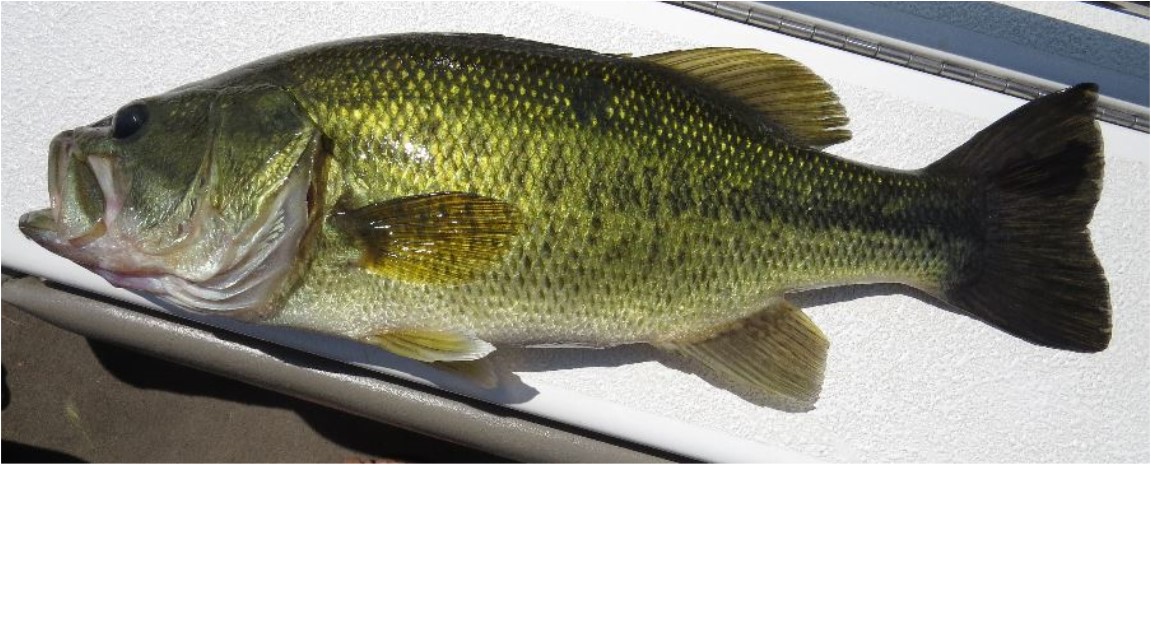
For example, this would prohibit the movement of largemouth bass or bluegill from Illinois to Wisconsin since interstate movement in interstate commerce and importation of certain fish from these states is now prohibited. Visit
the APHIS website for a complete listing of banned fish species
More ›
|
|
|
 |
|
Tired of reading? Want to use another of your other 5 senses? Then this section is for you.We have complied a list of recent fisheries related news that you can listen to!
Don't forget to turn your sound on!
|
|
Do you have an announcement, story or resource to recommend to our readers? Have a suggestion to make the site better?
We welcome your feedback! Feel free to send in your suggestions, story ideas, etc to the webmaster
|
|
 |